Loyalty at the Forecourt: What Supermarket Points Are Really Worth to Thirty Vans
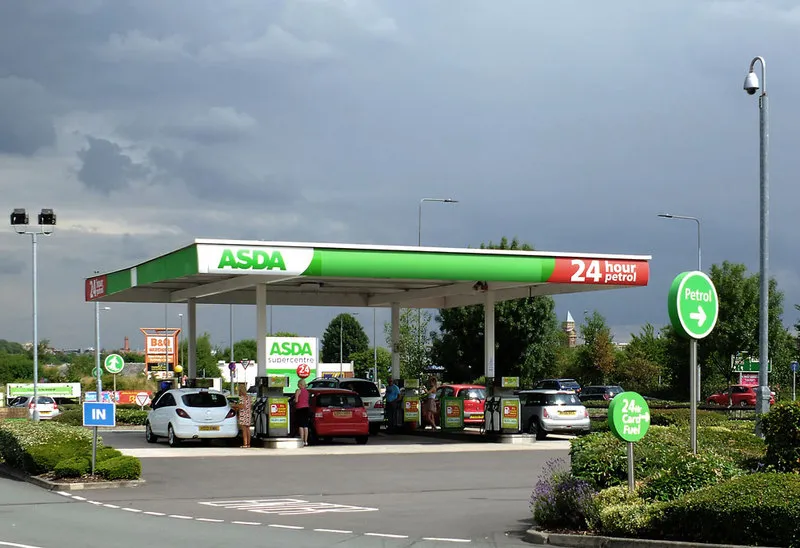
Photo: Gary Rogers , CC BY-SA 2.0, via Wikimedia Commons
Every few months a driver returns from a supermarket forecourt with a receipt showing a headline saving and asks why the fleet does not simply buy fuel that way. It is a fair question, and it deserves a proper answer rather than a shrug. The answer is not that loyalty schemes are worthless. It is that their value is small, conditional, and easily consumed by costs that never appear on the promotional poster.
The Headline Number Is Not the Price You Pay
A loyalty scheme's advertised benefit is a discount expressed in pence per litre, or a points accrual that converts into a similar order of magnitude. Read the small print and the saving usually sits somewhere between one and three pence per litre, occasionally higher during a short promotional window and frequently capped, both in litres per transaction and in the number of qualifying visits.
Compare that with the rate you already hold on a fuel card. A card rate is quoted net of the site's headline price, applies across a defined network, and is normally the number your finance team budgets against. If the card is delivering two pence per litre below the local average, a loyalty scheme offering the equivalent of one and a half pence at a forecourt priced at the average is not a saving at all. It is a slightly more complicated way of paying more.
The only legitimate comparison is net against net: the pump price after every discount applied, measured against the card rate on the same day, at the same site, for the same grade of diesel. Anything else is marketing.
What the Schemes Actually Pay Out
There is a second problem, which is the conversion step. Points are not money. They become money only when redeemed, and the redemption rate is set by the operator, not by you. Schemes that look generous on the forecourt frequently pay out best when points are converted into leisure vouchers or partner offers — categories of no use whatsoever to a commercial fleet. For business purposes the only valid conversion is a straight cash-equivalent reduction on fuel, and that figure is materially lower than the poster implies.
A useful discipline is to re-express every offer in pence per litre of cash-equivalent value, then apply a scepticism discount for caps, expiry and redemption friction. On that basis, most supermarket loyalty propositions land between one and two pence per litre, and only during promotional periods do they beat that band convincingly.
The Three Costs That Never Appear on the Poster
The first is time. Supermarket forecourts are built for cars. They are busy at exactly the hours when a van needs to refuel — early morning, lunchtime, and the school-run shoulder of the afternoon. A site with eight pumps and a queue is not a six-minute stop; it is twelve, and the driver is on the clock. Thirty vans refuelling once a week at an extra six minutes each is three hours of driver time every week, or around 156 hours a year. At a fully loaded driver cost of £17 an hour, that is roughly £2,650 before a single litre is bought.
The second is data. Loyalty receipts, and the statements that accompany them, do not attribute fuel to a vehicle registration, an odometer reading or a driver. That attribution is the entire basis of a fuel ledger worth auditing — the thing that lets you spot a van burning more than its route should require, or a card being used on a Sunday when the depot was closed. Lose it and you have bought a discount in exchange for losing control.
The third is private spend. A loyalty account is easy to share and easier to abuse. Without a company-held account, personal cards get linked to business purchases and the points pool becomes a private benefit funded by the business. The cost is rarely large in any single month; it is persistent, and it corrodes the discipline that makes the rest of the fuel programme work.
A Break-Even Model for Thirty Vans
Take thirty light commercial vans averaging 90 litres a week each — 2,700 litres weekly, or 140,400 litres across the year. Assume a loyalty benefit worth 1.5 pence per litre in cash-equivalent terms. The arithmetic then looks like this.
| Line | Annual figure |
|---|---|
| Loyalty benefit at 1.5ppl on 140,400 litres | £2,106 |
| Driver time at 6 extra minutes per fill, £17/hour | (£2,652) |
| Administrative reconciliation, 24 hours at £25/hour | (£600) |
| Approximate net position | (£1,146) |
The model is deliberately conservative. It assumes one fill per van per week and a modest time penalty. Even so, the scheme fails. To break even on time alone, the additional dwell must fall below about four minutes per visit; to break even on total cost, the loyalty benefit must exceed roughly 2.3 pence per litre in genuine cash value — a level reached only during promotions, and rarely sustained.
The sensitivity matters more than the point estimate. If your vans already pass a supermarket forecourt on a fixed route with spare minutes in the schedule, the time cost largely disappears and the scheme can clear its own hurdle. If your drivers divert to reach it, it cannot.
Where Loyalty Genuinely Earns Its Place
There are three situations in which supermarket schemes are worth the effort, and they are narrower than the marketing suggests.
- Promotional fuel events. A defined window with a substantial per-litre reduction, capped but material, is worth capturing — provided the fill is authorised centrally and the forecourt is on the route.
- Fixed-route fleets with slack. Where a van passes the same supermarket twice daily and the queue is short, the time penalty is near zero and the saving, however small, is real.
- Small fleets below fuel-card thresholds. A five-van operation may not qualify for competitive card terms. In that case a company-held loyalty account offers a modest, if crude, substitute — with the data limitations accepted knowingly.
Outside those cases, the scheme is a distraction from the pence-per-litre ledger, and distractions in fuel management are expensive.
Controls Before the First Swipe
If you proceed, proceed properly. Hold every loyalty account in the company name, registered to the trading address, with a central login controlled by finance and no personal cards linked. Treat points and vouchers as a rebate against fuel cost and book them as such, so the monthly fuel figure reflects reality. Restrict use to a short approved list of forecourts, and require a photograph of the receipt against the vehicle in whatever system you use for the fuel ledger — the same discipline you would apply to a card transaction.
Add two recurring checks. First, a quarterly comparison of net supermarket price against card rate at the same site, because the answer changes with the market. Second, a litres-against-odometer reconciliation by vehicle, since loyalty data will not do it for you.
A Thirty-Day Test
Run the scheme as a trial before adopting it. Pick five vans on routes that already pass an approved forecourt. Log the pump price paid, the discount applied, the minutes at the pump and the odometer reading for every fill. Compare the resulting net pence per litre against what the same five vans achieved on card in the preceding month, and compare the two datasets for quality of attribution.
If the net figure is better and the data still reconciles, extend it. If the net figure is worse, or the ledger has become harder to audit, the trial has done its job at negligible cost.
The Verdict
Supermarket loyalty schemes are not a fraud on the fleet manager, but they are a poor substitute for a properly negotiated card rate and a disciplined fuel ledger. Their value is real but thin — one to two pence per litre, capped and conditional — and it is easily outweighed by queuing, lost vehicle attribution and the slow creep of private spend. Measure them net against net, price the minutes honestly, and most thirty-van fleets will find the points belong in the personal shopper's purse, not the depot's cost control file.