The Blue Tank Audit: Keeping AdBlue Quality and Purchasing Under Control

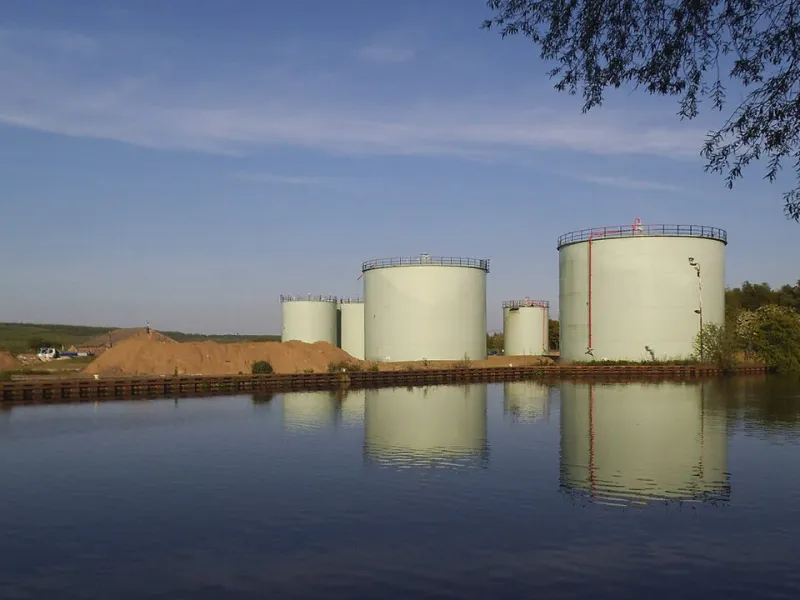
Photo: AdBlue bulk storage tank and van workshop UK, via o.quizlet.com
AdBlue rarely appears in the same conversation as diesel. It is bought in 10-litre cans, 210-litre drums or bulk tanks, decanted in the yard and recorded, if at all, on a separate invoice. That separation is exactly why it becomes a quiet cost centre. A van that uses 1,000 litres of diesel a year may consume 25 to 40 litres of AdBlue; a tractor unit may use several thousand. At £0.60 to £1.20 a litre depending on pack size and contract, the fluid itself looks modest. The cost appears at the edges: contaminated batches, crystallised lines, emergency top-ups at motorway prices and tanks ordered for a consumption profile that no longer exists.
What normal consumption looks like
AdBlue consumption is not a fixed ratio, but it is predictable enough for budgeting. For Euro 6 light commercial vehicles, a working benchmark is 2% to 4% of diesel by volume. For heavy trucks, 3% to 5% is a reasonable planning range. These are ranges, not guarantees: duty cycle, load, ambient temperature, engine calibration and the condition of the SCR system all move the number.
Take a van covering 25,000 miles a year at 35mpg. That is roughly 3,250 litres of diesel. At 3% AdBlue consumption, the van needs about 98 litres a year. At a bulk price of 70p a litre, that is £69. At a motorway emergency price of £1.40 a litre in 10-litre packs, the same volume costs £137 — a £68 difference on one van. Across a fleet of 40 vans, the gap between planned bulk buying and reactive top-ups is not a rounding error.
The quality checks that matter
AdBlue is not simply a solution of urea in water. ISO 22241 sets out the purity requirements for automotive urea, and the details matter to the SCR system. ISO 22241-1 covers the quality characteristics: urea content typically between 31.8% and 33.2%, plus limits on biuret, aldehydes, insoluble matter and metals such as calcium, iron, copper and zinc. ISO 22241-2 provides the test methods, while the handling and storage guidance sits alongside the quality standard.
For a fleet, the practical checks are these. Ask the supplier for a certificate of analysis for each batch, and check that the batch number on the certificate matches the container or delivery note. Keep delivery records for at least the warranty period. Use a refractometer or density check as a routine incoming check if you decant in bulk; it will not replace a laboratory analysis, but it will catch a diluted or incorrect batch before it reaches twenty vehicles. Send a sample for independent testing if you suspect contamination, if the vehicle has repeated SCR faults, or if the tank has been refilled from an unknown source.
Contamination is often boring rather than dramatic. A dirty funnel, a diesel can used for AdBlue, a tank vent left open or a dispenser nozzle left on the ground can introduce dust and hydrocarbons. Copper, brass, zinc and galvanised components should not be used in AdBlue storage or dispensing equipment. Stainless steel, polyethylene and compatible plastics are the usual materials. A dedicated, labelled container is not bureaucracy; it is the cheapest quality-control measure available.
Storage: the crystallisation risk
AdBlue crystallises when water evaporates. White residue around a nozzle, filler cap or tank vent is a warning sign, not a cosmetic issue. Crystals can block filters, clog lines and damage the dosing module. The storage audit should therefore start with the tank, not the invoice.
Check that the bulk tank is dedicated, bunded, labelled and protected from direct sunlight. Keep it within the supplier's recommended temperature range — typically below 30°C and above freezing, bearing in mind that AdBlue freezes at about -11°C. Keep lids and hatches closed. Fit a filter on the dispenser and change it to the supplier's schedule. Inspect the nozzle and hose for crystals, and clean or replace them rather than washing residue back into the tank. Rotate stock so that older fluid is used first; sealed AdBlue has a finite shelf life, and heat shortens it.
For drums and cans, store them upright, off the floor and away from diesel, oil and solvents. Do not decant into an unmarked container. Do not return unused fluid to a bulk tank unless the supplier confirms it is acceptable; the risk of contamination usually outweighs the saving.
Purchasing: reconcile what is bought with what is used
A simple 90-day audit will reveal most of the waste. Pull together three records: AdBlue invoices by pack size and price, tank dips or stock counts, and vehicle mileage or diesel usage from telematics. Compare the litres purchased with the litres that consumption benchmarks would suggest. A consistent overshoot points to over-ordering, leakage, inaccurate dispensing or a vehicle that is using more AdBlue than it should. A consistent undershoot may mean that drivers are buying emergency top-ups on fuel cards, which is often the most expensive route.
Check the pack-size economics. Bulk delivery is usually cheapest per litre, but only where throughput justifies the tank and the delivery minimum. Drums sit between bulk and cans; cans are convenient but costly for anything beyond a small van fleet. Review emergency purchases separately. A handful of motorway forecourt AdBlue receipts can undo the saving from a whole quarter of bulk buying.
Finally, put AdBlue on the same monthly report as diesel. Show litres purchased, litres used, price per litre, stock movement and any quality tests. That single line makes the cost visible to the person who signs the invoices and the person who maintains the vehicles. The objective is not to chase the cheapest litre in isolation, but to close the gap between what is bought, what is stored and what actually reaches the SCR system. In 2026, with Euro 6 and Euro 7 compliance under close scrutiny, that gap is both a cost-control issue and an operational one.